
Description
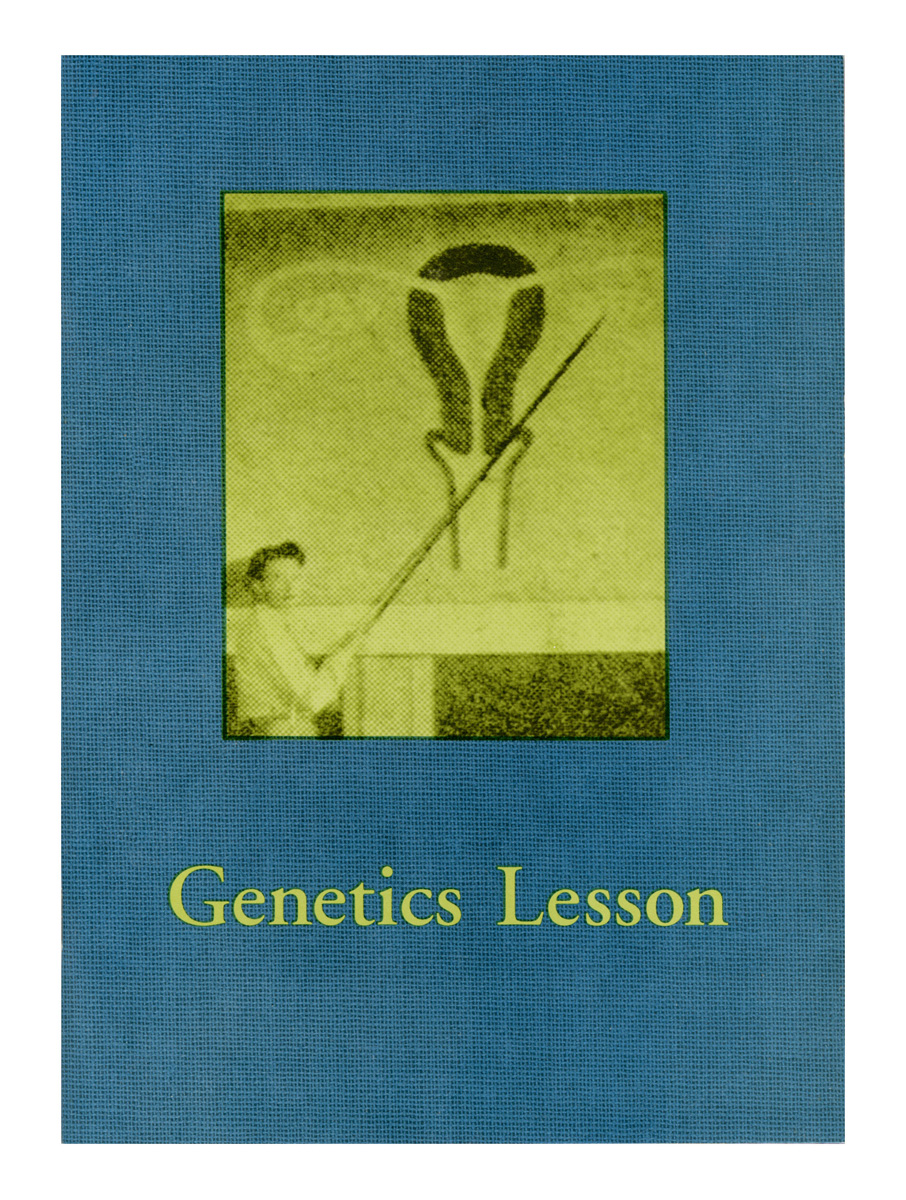
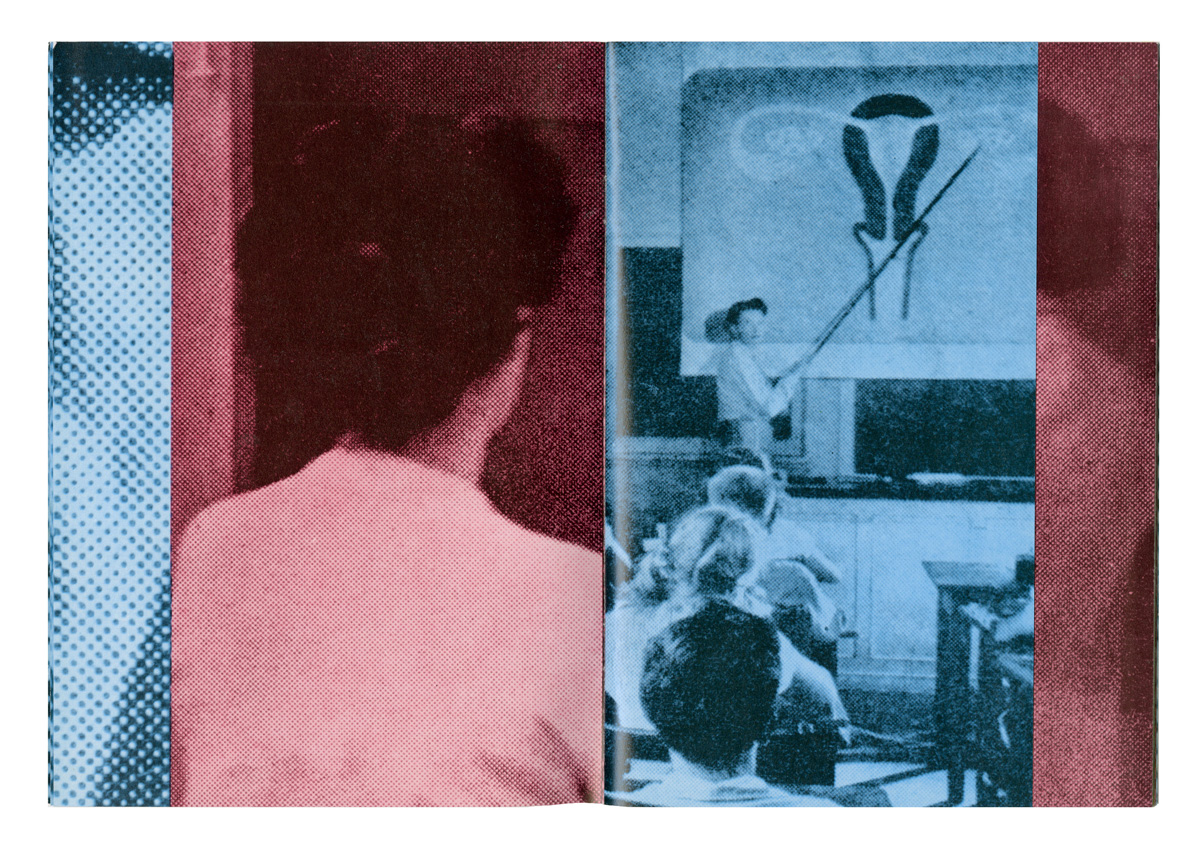
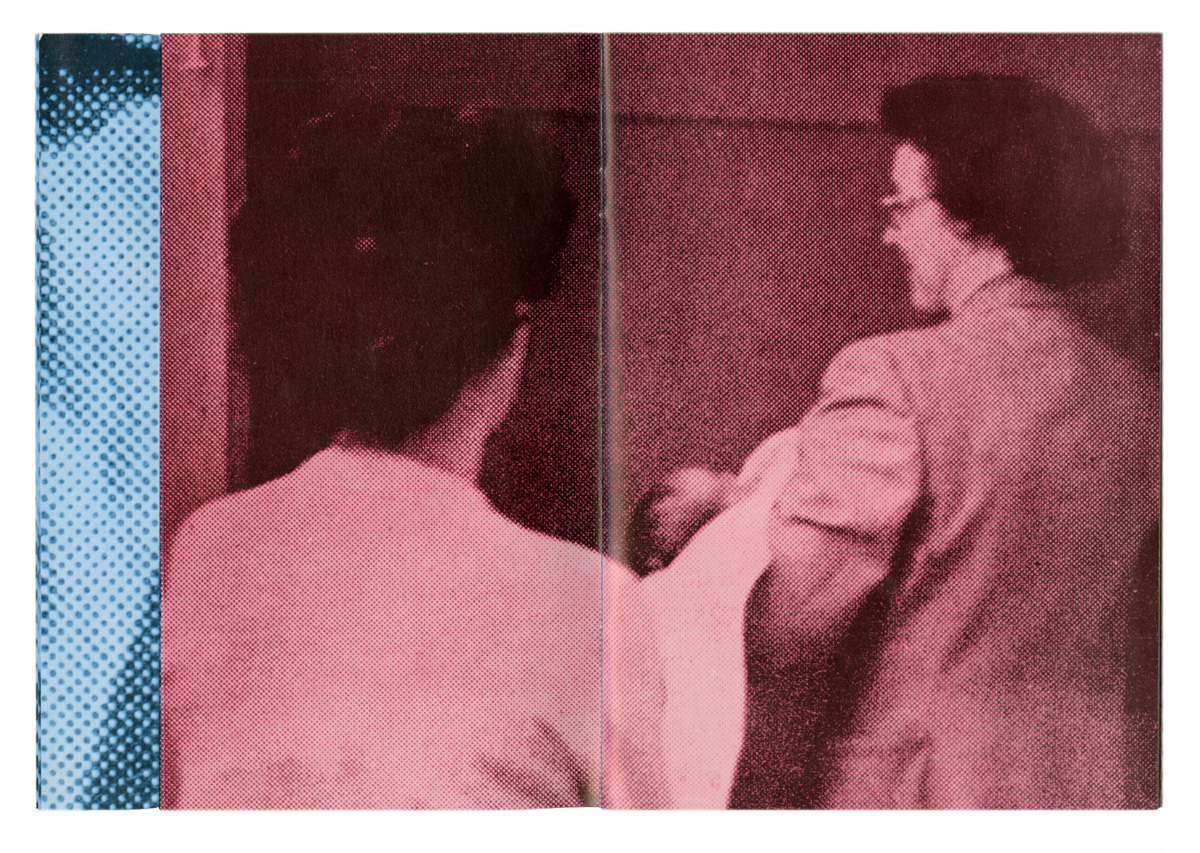
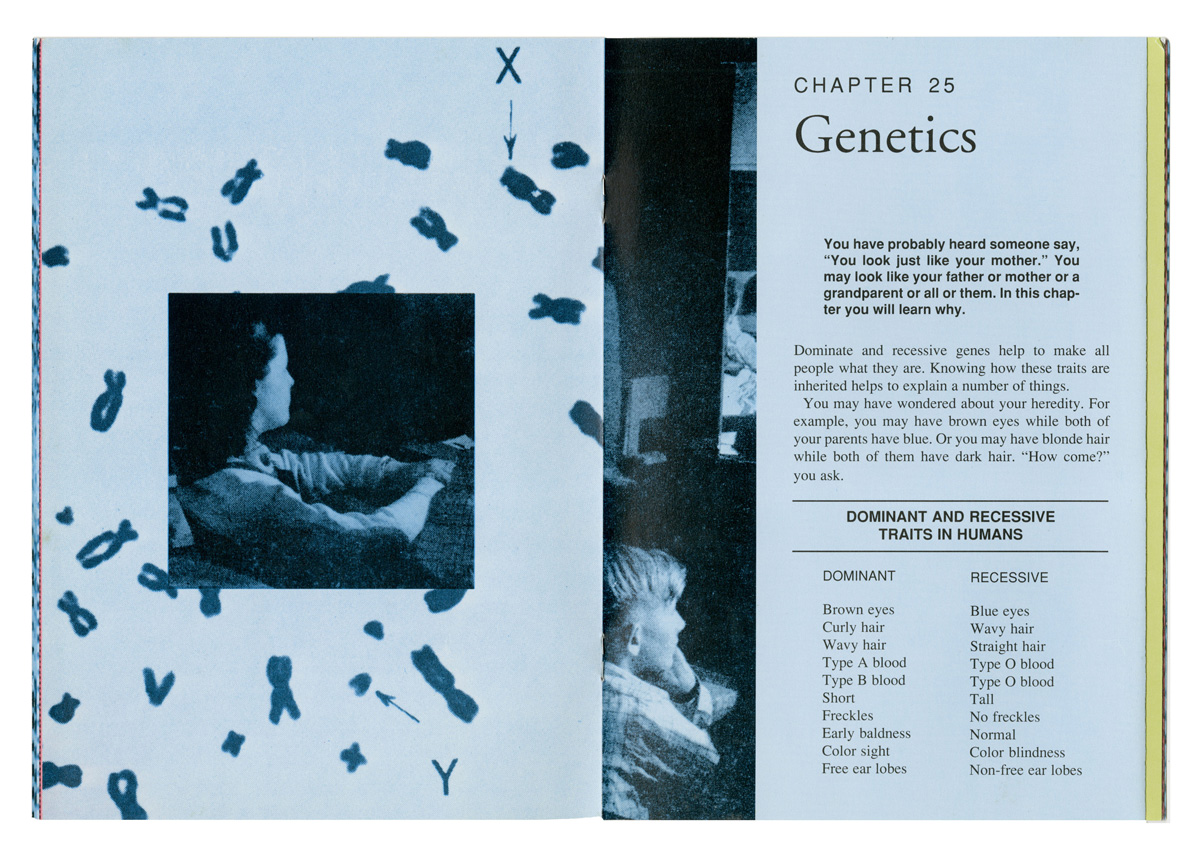
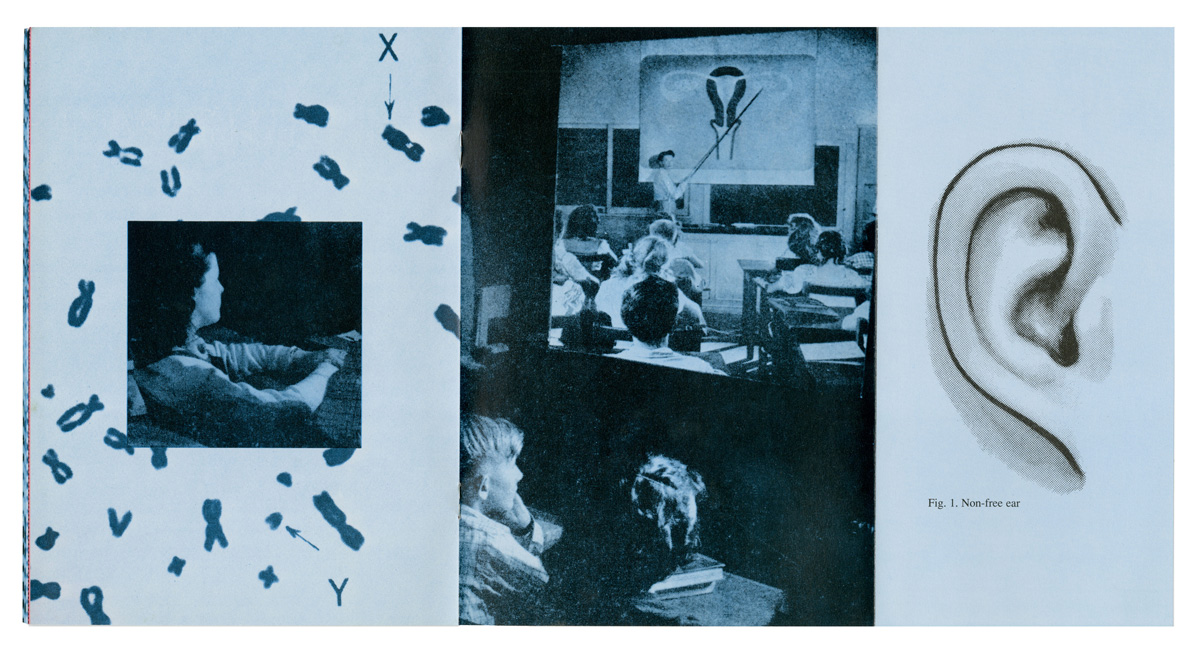
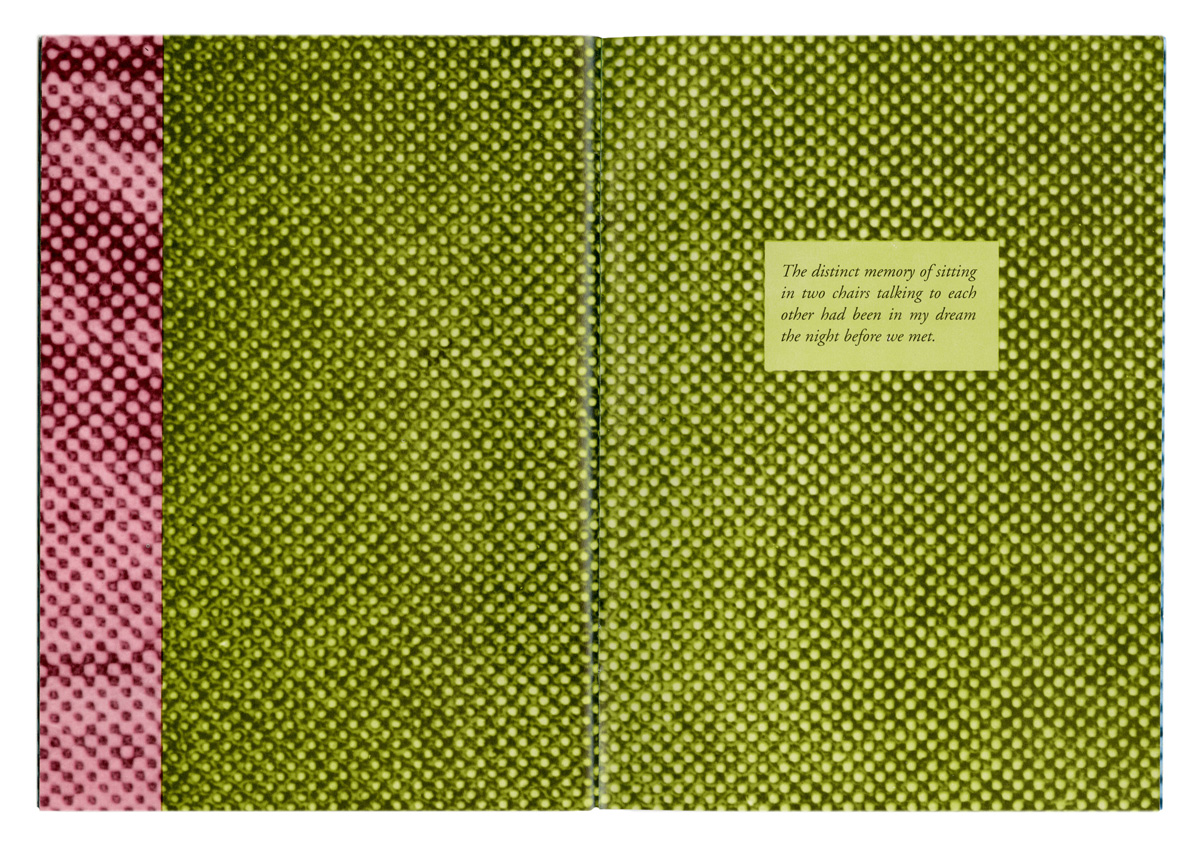
Genetics Lesson, Fessler’s sixth Artist’s Book, is based on her 1990 Genetics Lesson installation and is her most structurally complex artist’s book. It contains numerous gatefolds that allow for multiple readings of the story.
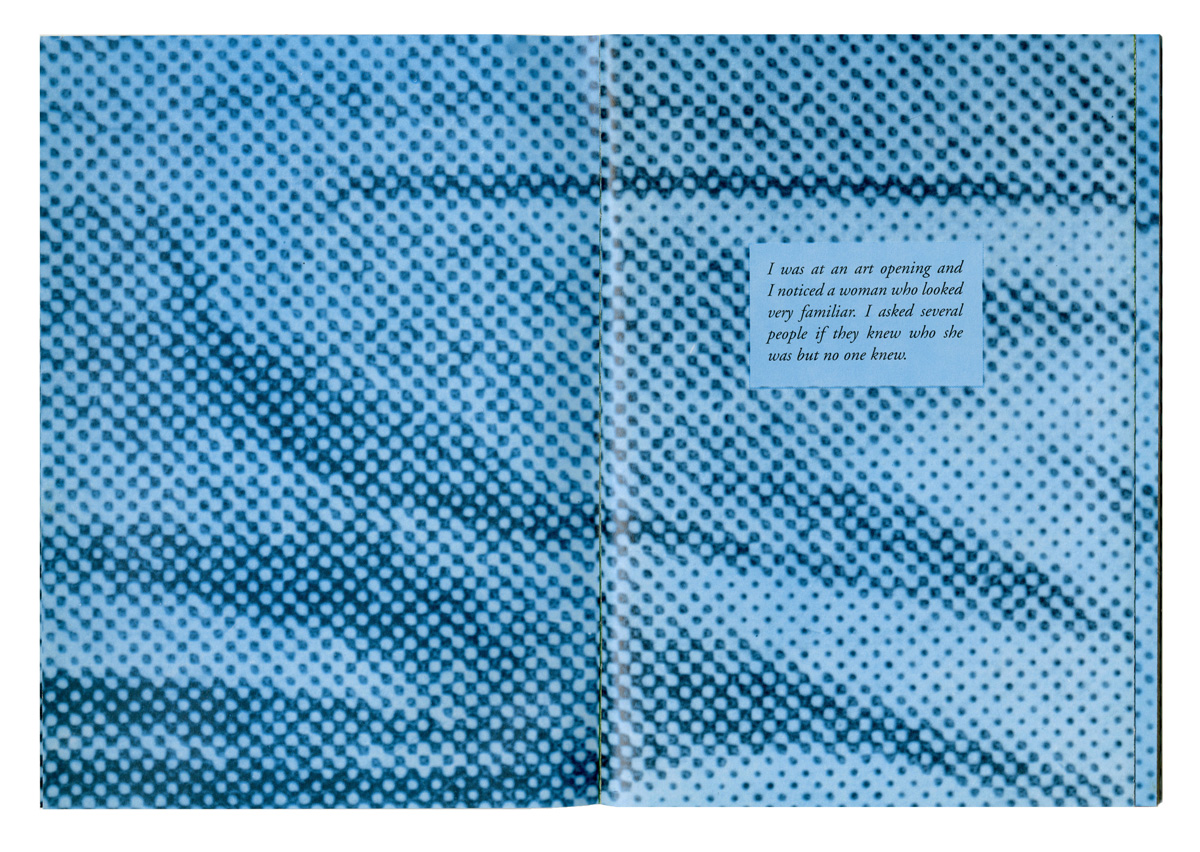
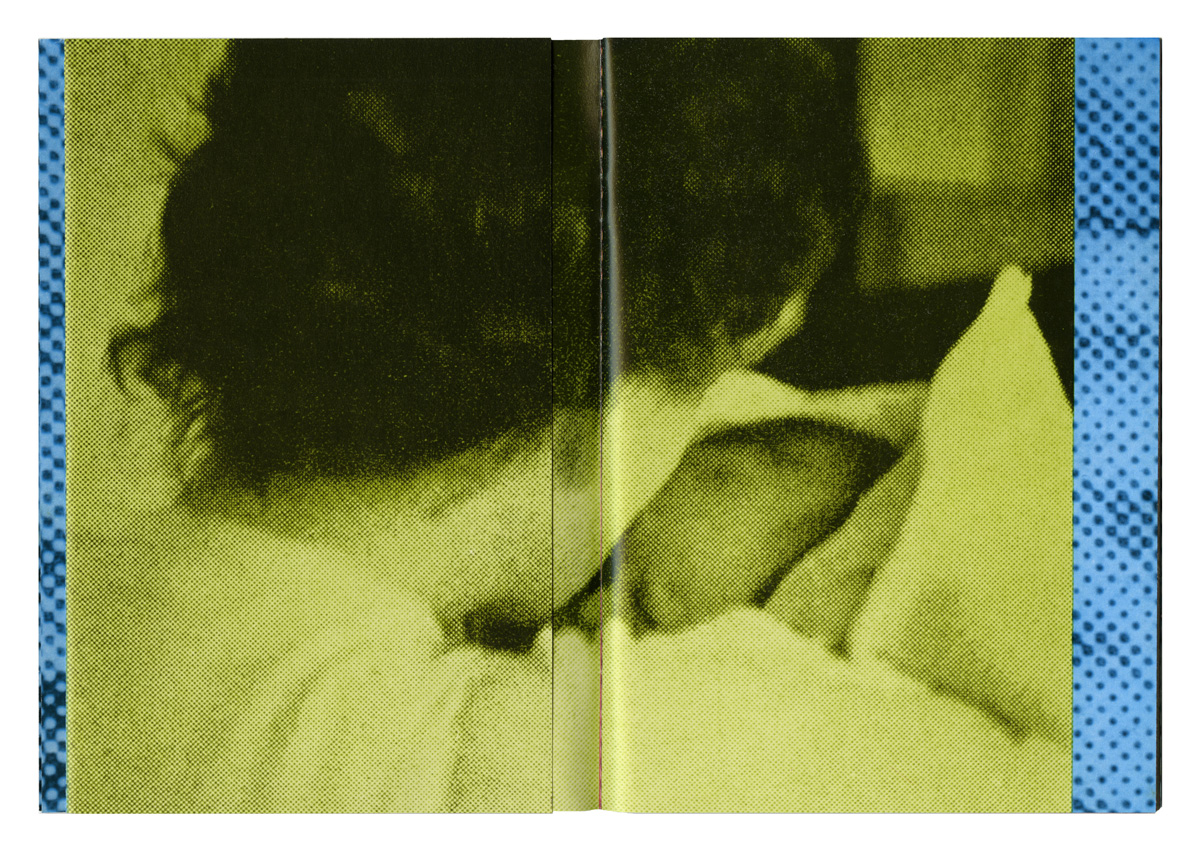
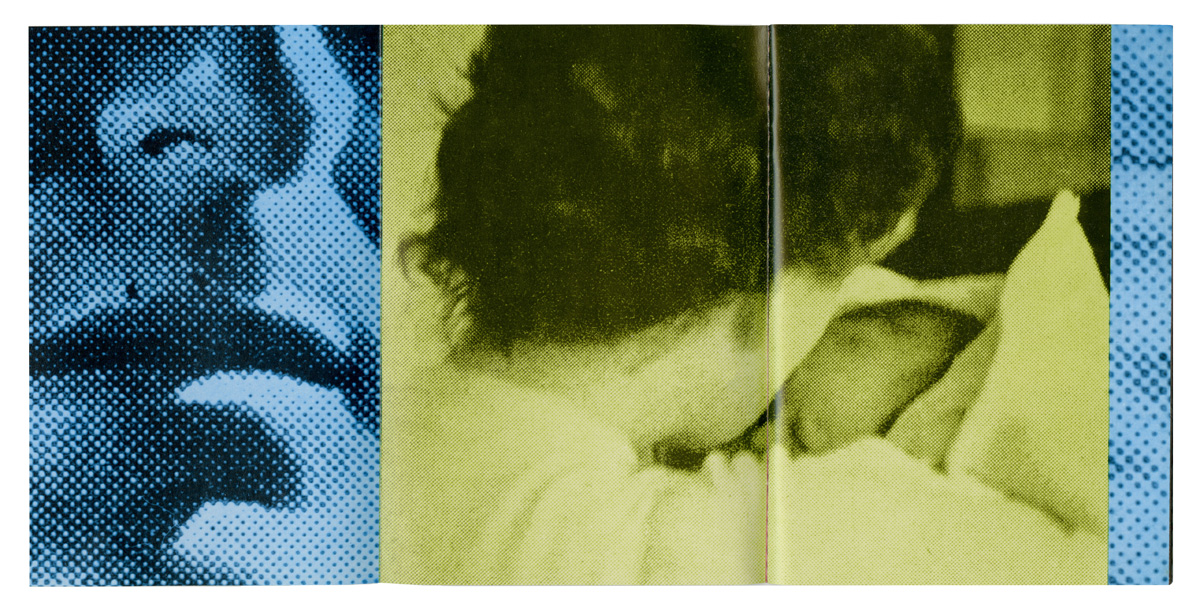
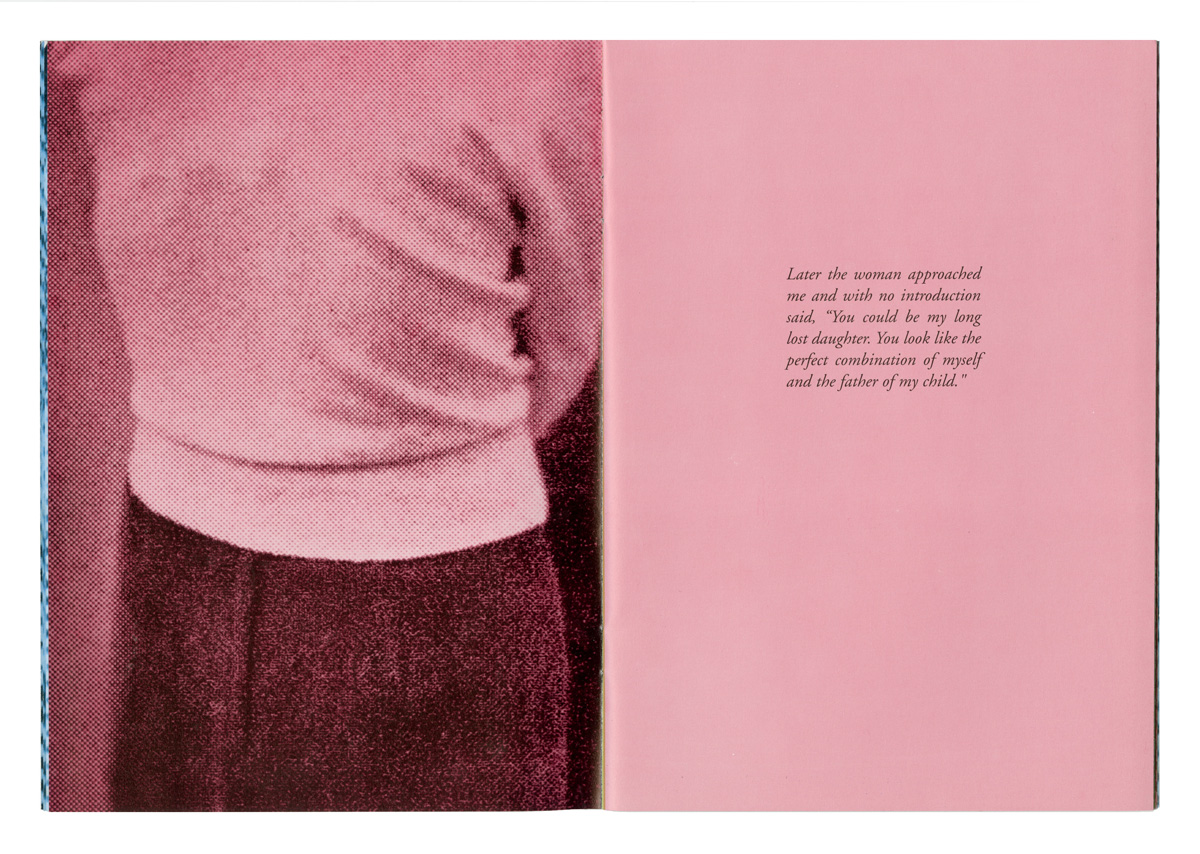
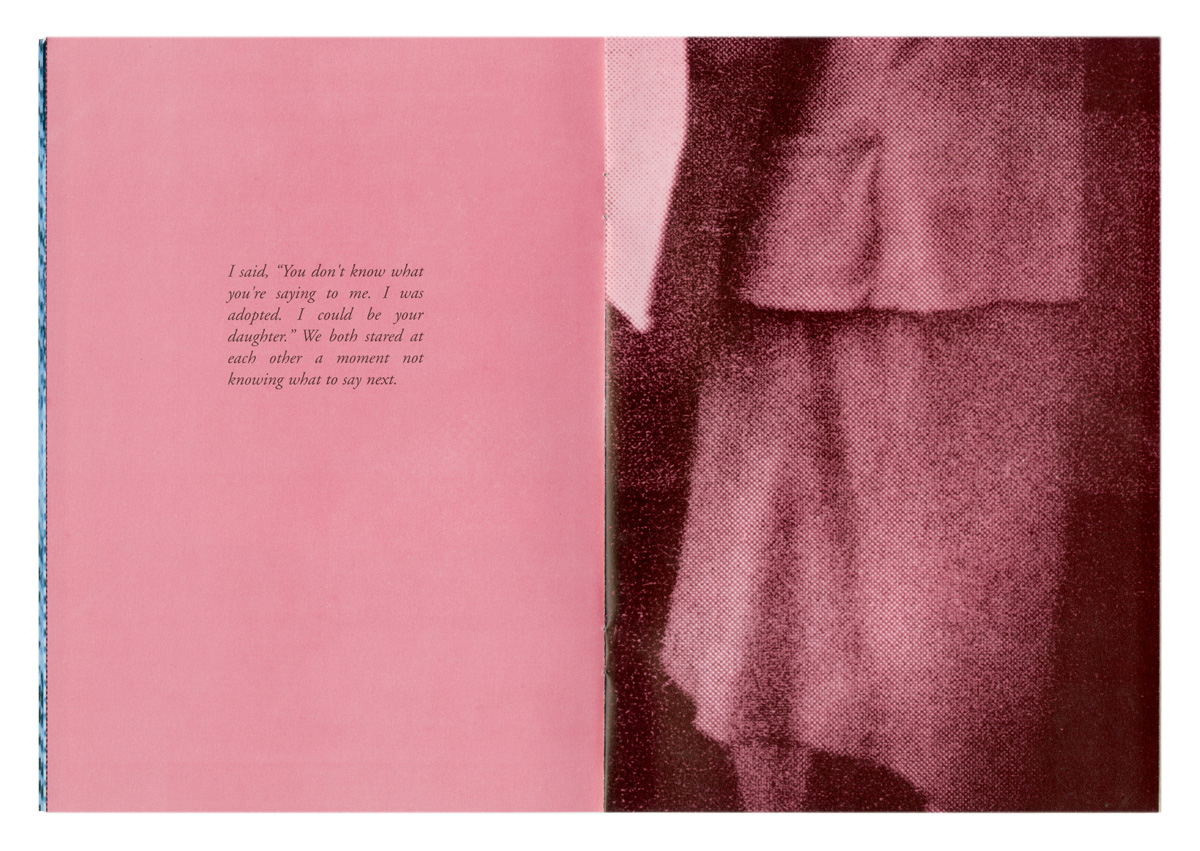
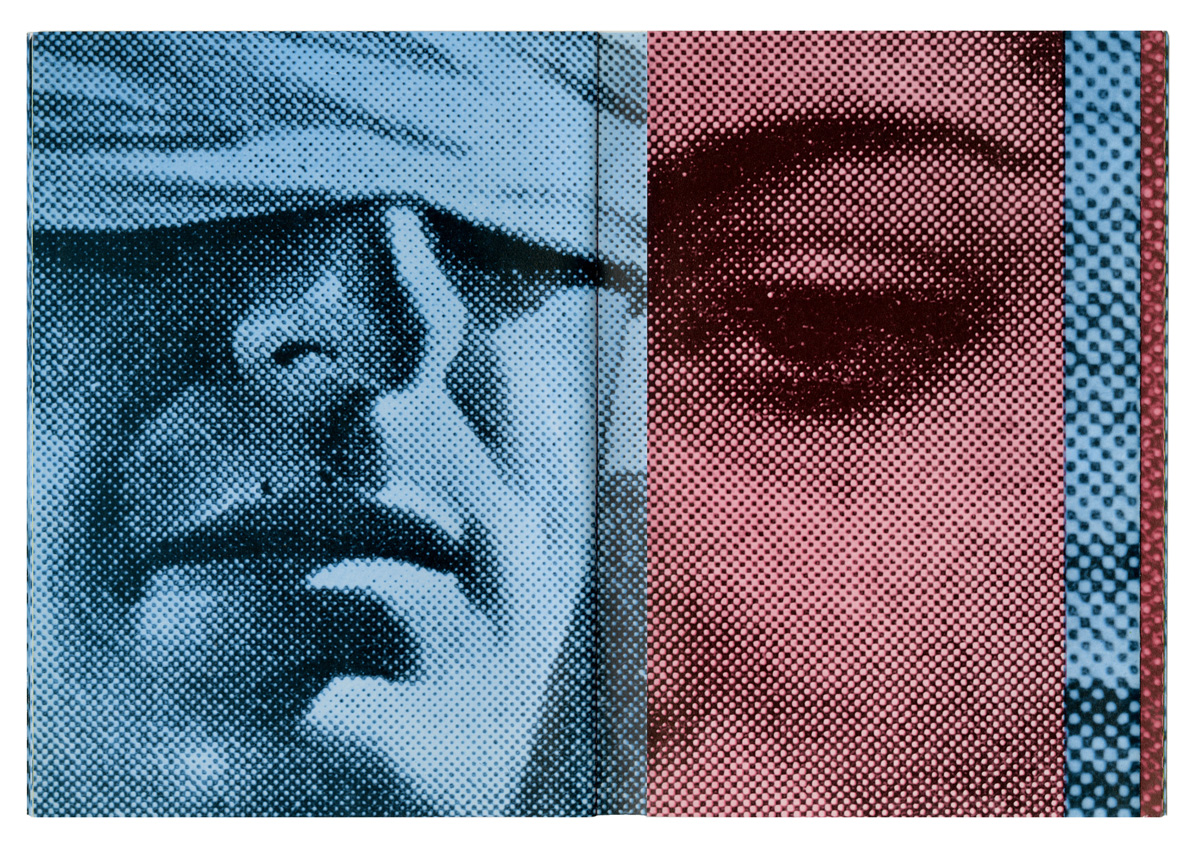
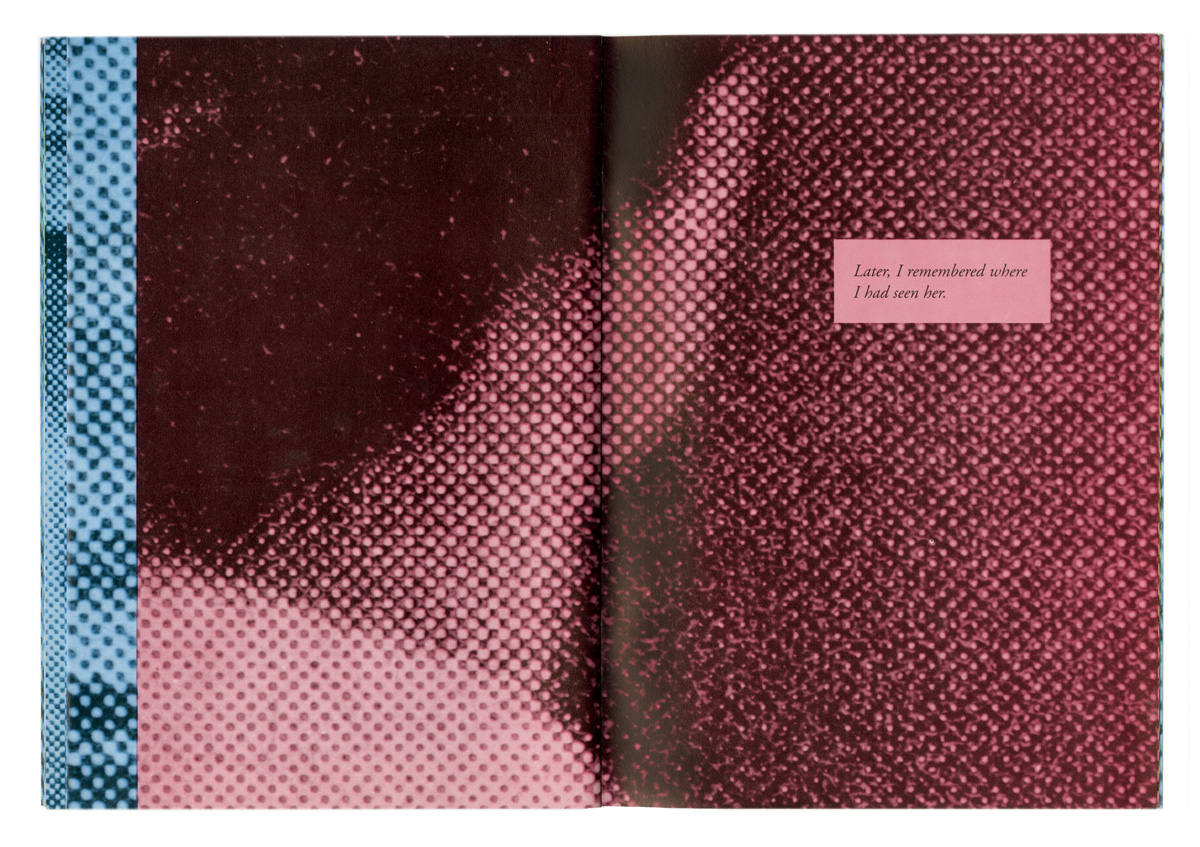
The book opens with a story. Fessler is at an art opening and notices a woman who looks very familiar. She asks several people if they know who she is, but no one knows. When readers turn the page, they find a close-up image of a woman holding a newborn baby up to her face. It then becomes apparent that the image has a gatefold on the left side that can be opened. When opened, there is an extreme close-up of a man’s face on the fold-out page. The close-up suggests intimacy between the man and woman, as if he is looking over her shoulder at his child.
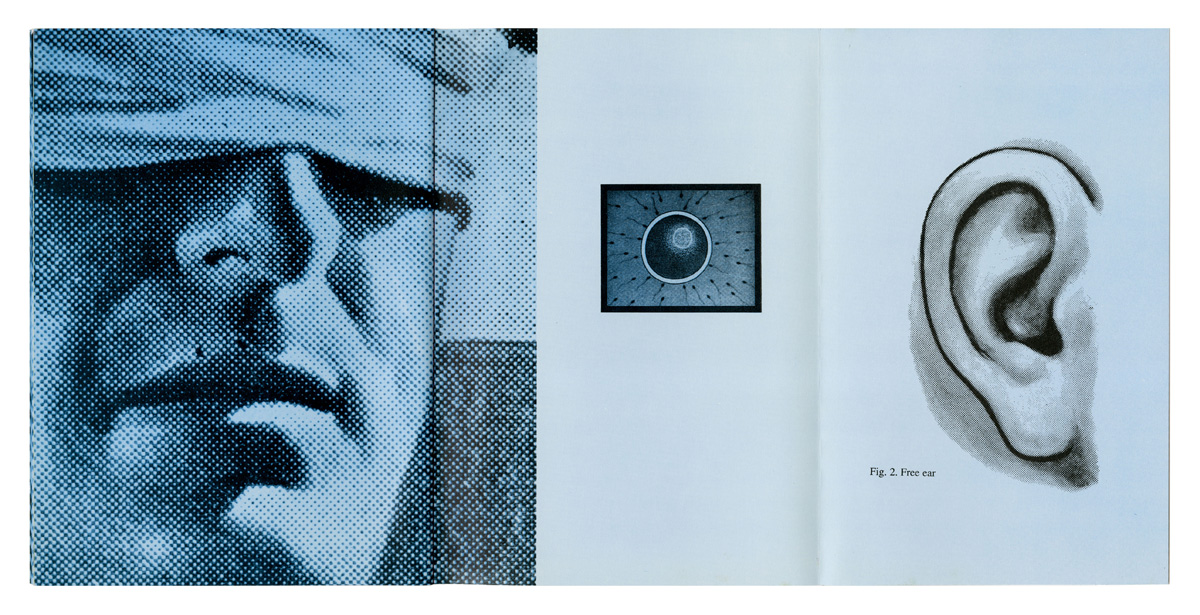
At this point, viewers are faced with a decision. They can either fold the image of the man back into the book, or leave him out. If they leave the gatefold open, he will remain visible throughout the rest of the book. The decision to make him part of the story, or exclude him, is up to the viewer. Later, readers encounter the man’s face again, but from a more distant view. They can now see that he is blindfolded. He had been blindfolded all along. But with distance, and time, things become clearer.
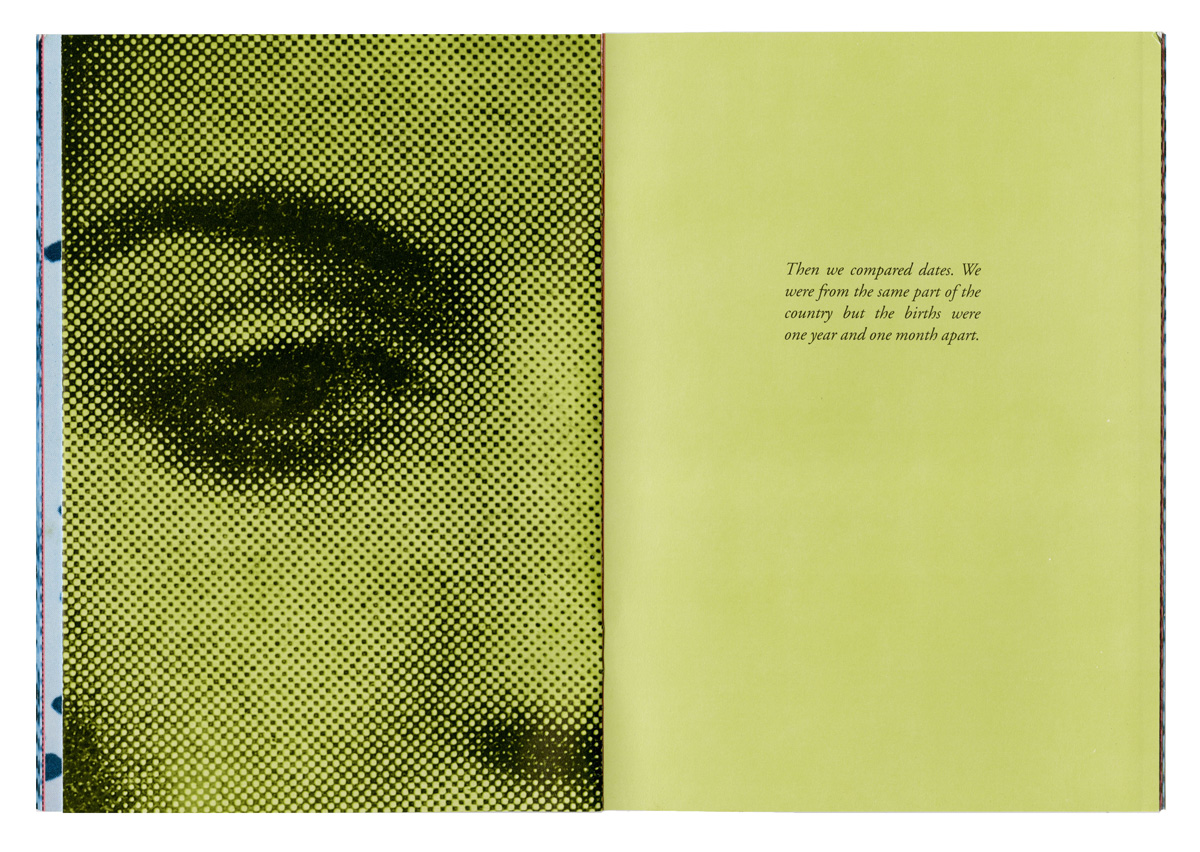
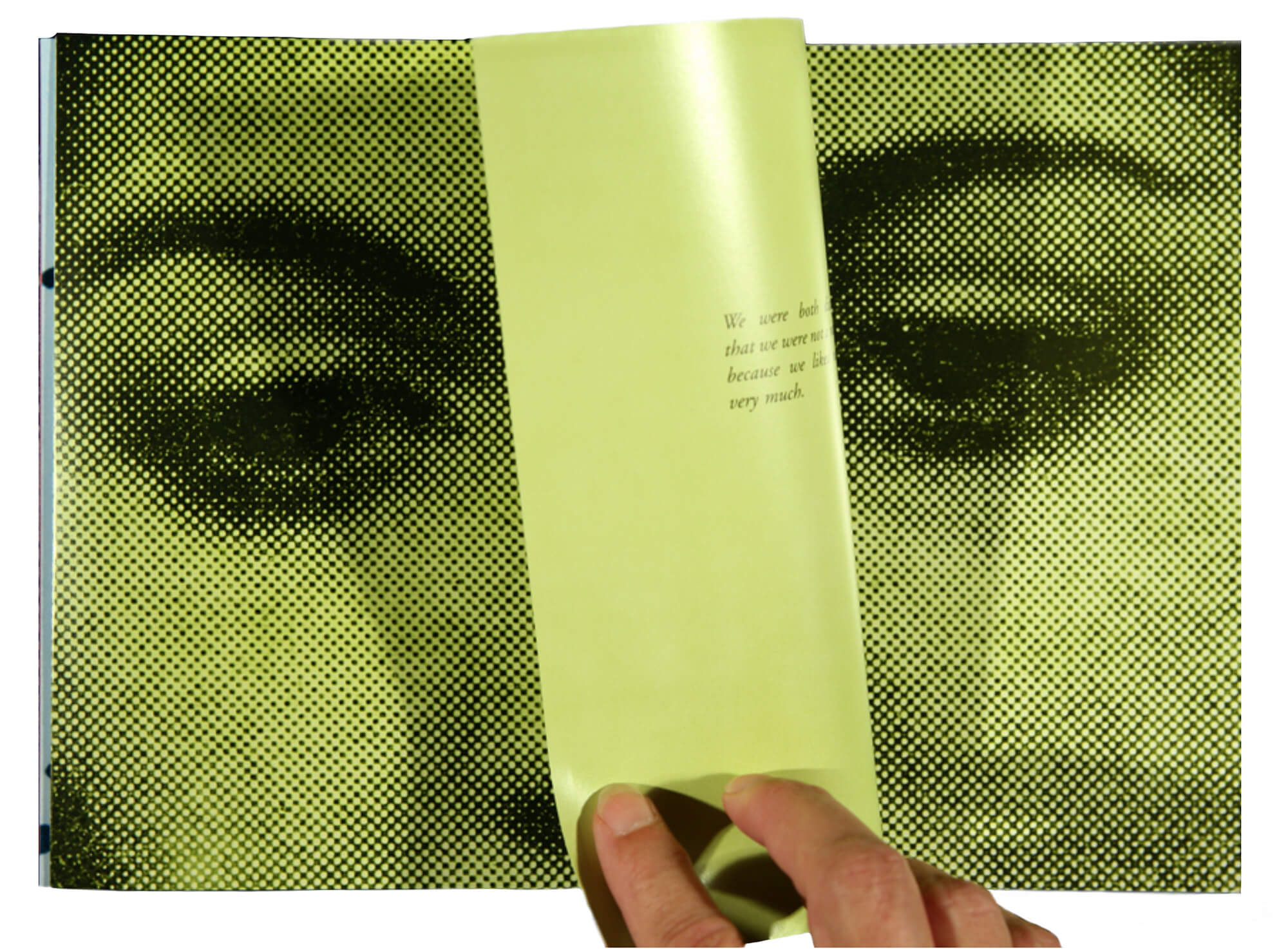
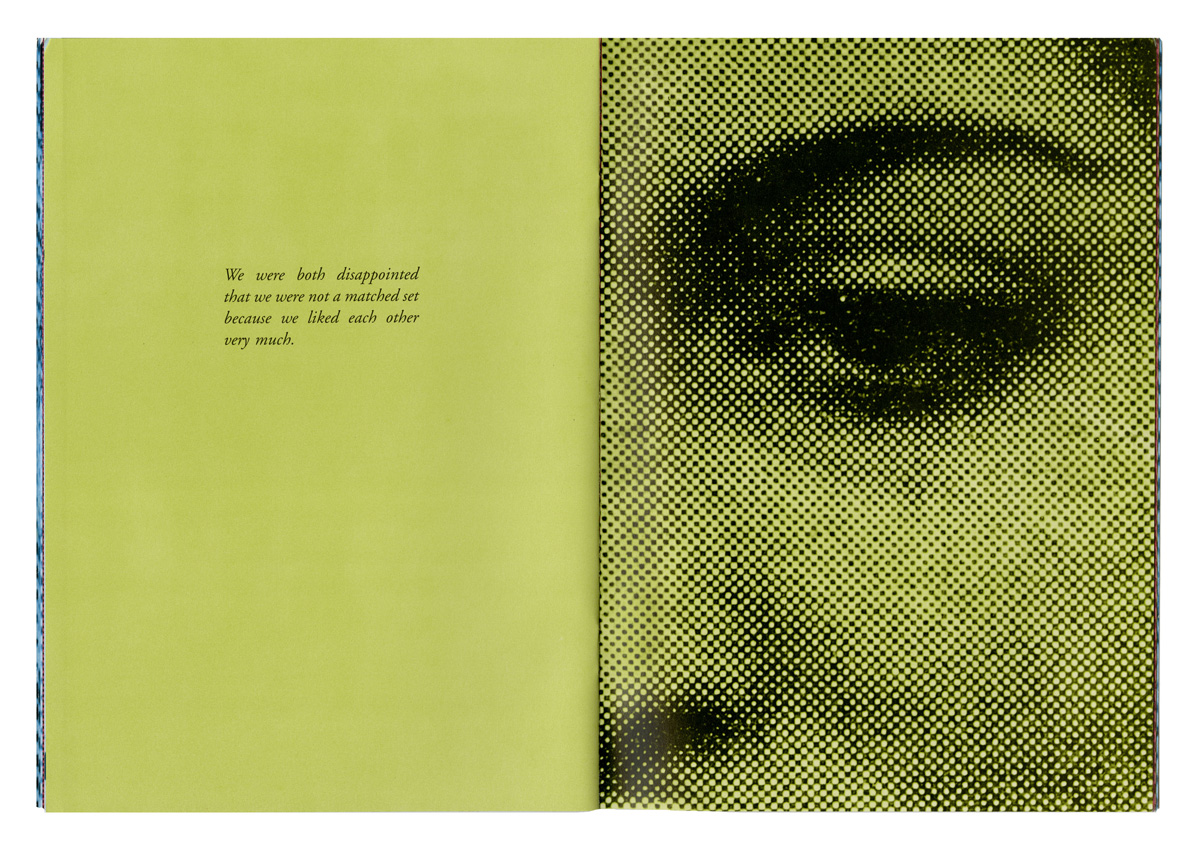
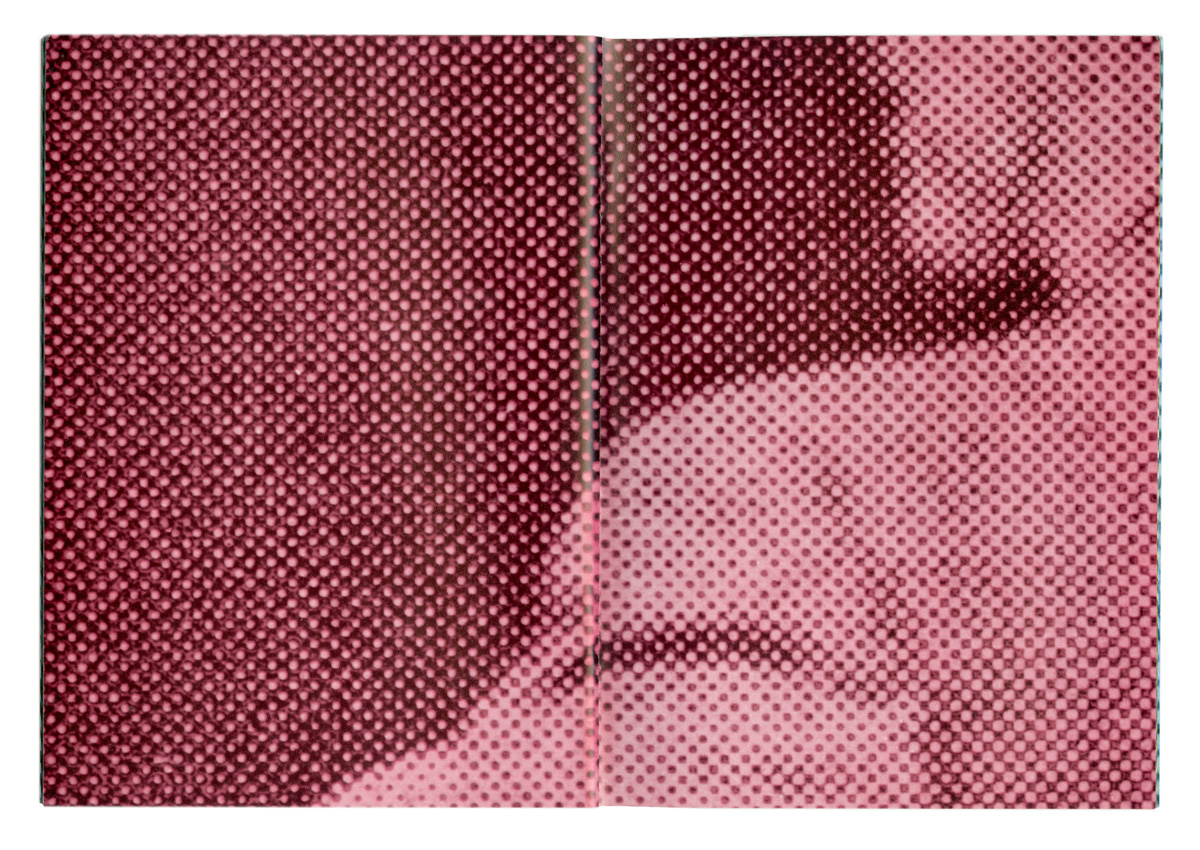
Later in the book, the turning of a page suggests a potential genetic connection. At the point in the story where Ann encounters the woman in the gallery, the double-page spread includes an extreme close-up of the left half of a woman’s face. The page on the right reads “Then we compared dates. We were from the same part of the country but the births were one year and on month apart.” When viewers turn the page — just a
moment —they can see the right half of the woman’s face on the next page, and a complete face is visible. But after the page has been turned, on the left side we read “We were both disappointed that we were not a matched set because we liked each other very much.” To the right we see half of a face. The potential for wholeness proves to be allusive.
Information
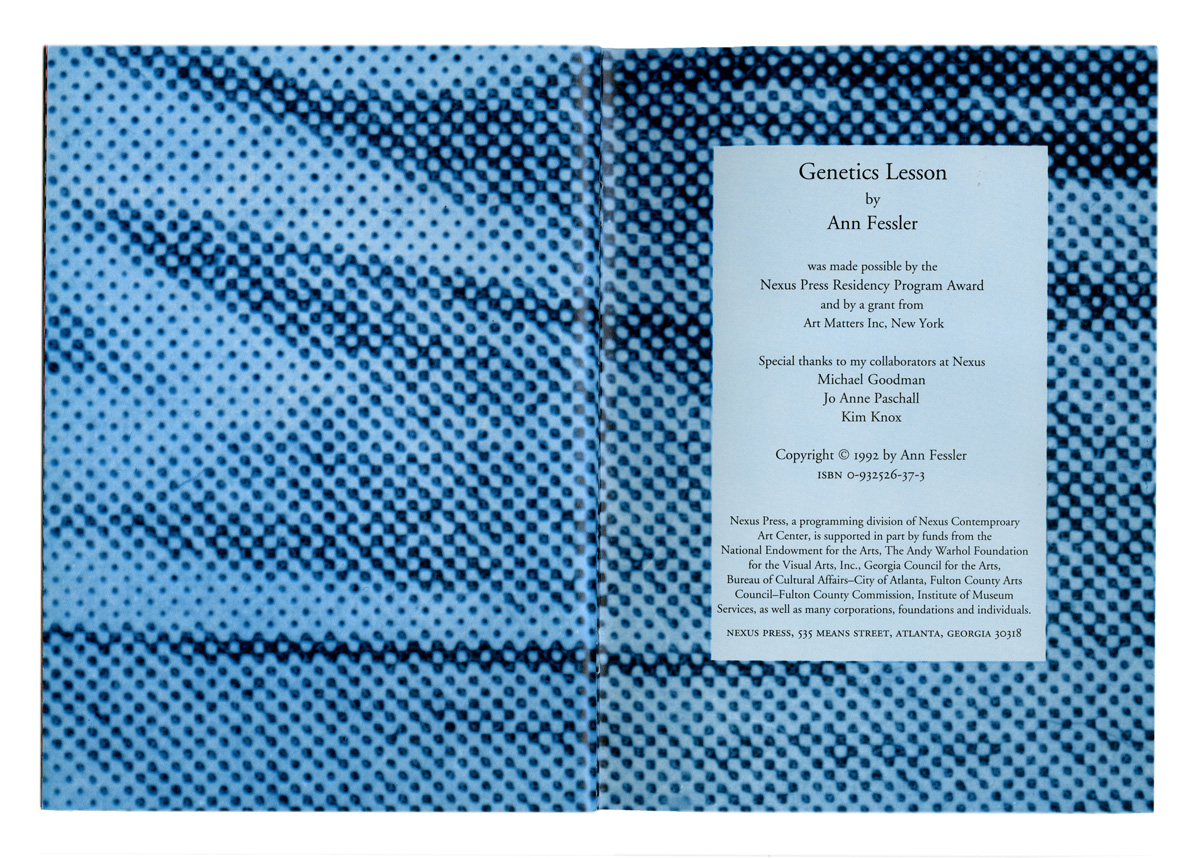
Genetics Lesson, by Ann Fessler, 1992
Made possible by a Nexus Press Residency Award, Nexus Press, Atlanta, Georgia; and Art Matters, New York.
Out of Print
The Nexus Press Residency Award provided Fessler with the opportunity to spend one month at the press, and to be involved in the pre-press negative and plate-making work, preparing the book for 4-color printing.